What Does Neurodiversity-Affirming Therapy Actually Look Like?
If you’ve spent a lifetime feeling like you’re reading from a script that everyone else somehow already knows... you’re not alone.
For many women, non-binary, and fem-identifying people, the world can feel like a series of performances. We mask. We mirror. We squeeze ourselves into shapes that don’t quite fit, all to navigate a society built for a very specific type of brain.
And often, when we finally reach out for support, traditional therapy can feel like just another place where we have to "perform."
Standard clinical approaches often start with a question: What is wrong with you? They look for "disorders" to treat and "deficits" to fix. But what if there isn’t anything to fix? What if your brain is simply a beautiful, natural variation of the human experience?
This is where neurodivergent affirming therapy begins.
It’s not just a buzzword. It’s a shift in the very foundation of how we look at mental health. In this space, we move away from the idea of being "broken" and toward a place of curiosity, acceptance, and authentic rhythms.
Moving Away from the "Medical Model"
In a traditional clinical setting, neurodivergence, like autism or ADHD, is often viewed through a medical lens. The focus is on how much you struggle to meet neurotypical standards. Success is often measured by how well you can "cope" or look "normal."
But as a neurodiversity affirming therapist in the UK, my approach is different.
I work from the belief that neurodivergence is a natural part of human diversity. Just as we have different heights, eye colours, and personalities, we have different ways of processing the world.
In our sessions, we aren’t trying to "cure" your ADHD or "train" your autism. We are noticing how your unique nervous system works. We are looking at the environments around you and seeing where they clash with your needs.
If life feels loud... if your energy comes in waves... if you feel lost in the middle of a transition... we don’t label those as "problems" to be deleted. We see them as parts of your experience that deserve space and validation.

The Strengths-Based Approach: You Are the Expert
You might have spent years being told you are "too much" or "not enough." Maybe you’ve been told you’re too sensitive, too loud, too quiet, or too intense.
In neurodiversity-affirming therapy, we challenge that narrative.
This is a strengths-based space. This doesn't mean we ignore the very real challenges of living as a neurodivergent person in a neurotypical world. We acknowledge the burnout, the sensory overwhelm, and the exhaustion of masking.
But we also look at your natural ways of being as valid.
If you have a "interest" that brings you joy, we celebrate that depth of focus.
If you think in patterns and connections that others miss, we value that perspective.
If you need to move, fidget, or look away to process your thoughts, we welcome that.
I position myself as a collaborator who works alongside you. I am not an authority figure analysing you from a distance. You are the expert on your own life and your own internal world. My role is to offer a supportive, confidential space where you can explore those patterns without the pressure to produce a "clinical" result.
What Does a Session Actually Look Like?
One of the biggest hurdles to starting therapy is the "mystery" of it all. If you’re already feeling overwhelmed, the unknown can feel like a mountain.
Let's peel back the curtain.
My core service is a 50-minute therapy session conducted online. Because it’s virtual, you can be in your most comfortable environment. You can wear your softest clothes, sit on the floor, have your pets nearby, or keep the lights low.
The "Unmasked" Space
The most important part of our time together is that you don’t have to perform.
You don’t have to make eye contact. If looking at the screen feels intense, look at the wall, your garden, or your hands. I’ll be here, listening.
You can stim. If moving helps you regulate your nervous system, please do it.
We slow things down. If you need a moment to find the right words: or if there are no words at all: that’s okay. We work at your pace.
Sometimes it looks like coping… but inside, it can feel very different. We use our time to bridge that gap. We might talk about sensory overload, the weight of people-pleasing, or how to build a self-care routine that actually fits your energy levels, not just what a neurotypical world says you "should" do.

Why This Matters for Women and Non-Binary Folk
Many of my clients are "late-diagnosed" or self-identified. Perhaps you’ve spent thirty years wondering why "just chilling" feels so difficult, or why you feel completely drained after a simple social interaction.
For women and non-binary people, masking is often a survival strategy. We learn to hide our traits to stay safe or to fit in. But a lifetime of masking leads to a very specific kind of exhaustion: neurodivergent burnout.
Traditional therapy might suggest you just need "better time management" or to "challenge your thoughts." But if your brain is literally wired to process more information than the person next to you, those "shoulds" only add to the guilt.
In an affirming space, we recognise that your burnout isn't a failure of will. It's a sign that your nervous system is overtaxed. We don't push for "productivity." We push for sustainable rhythms.
A Different Kind of Connection
At the end of the day, the most important element of therapy isn't the theory or the labels. It's the relationship.
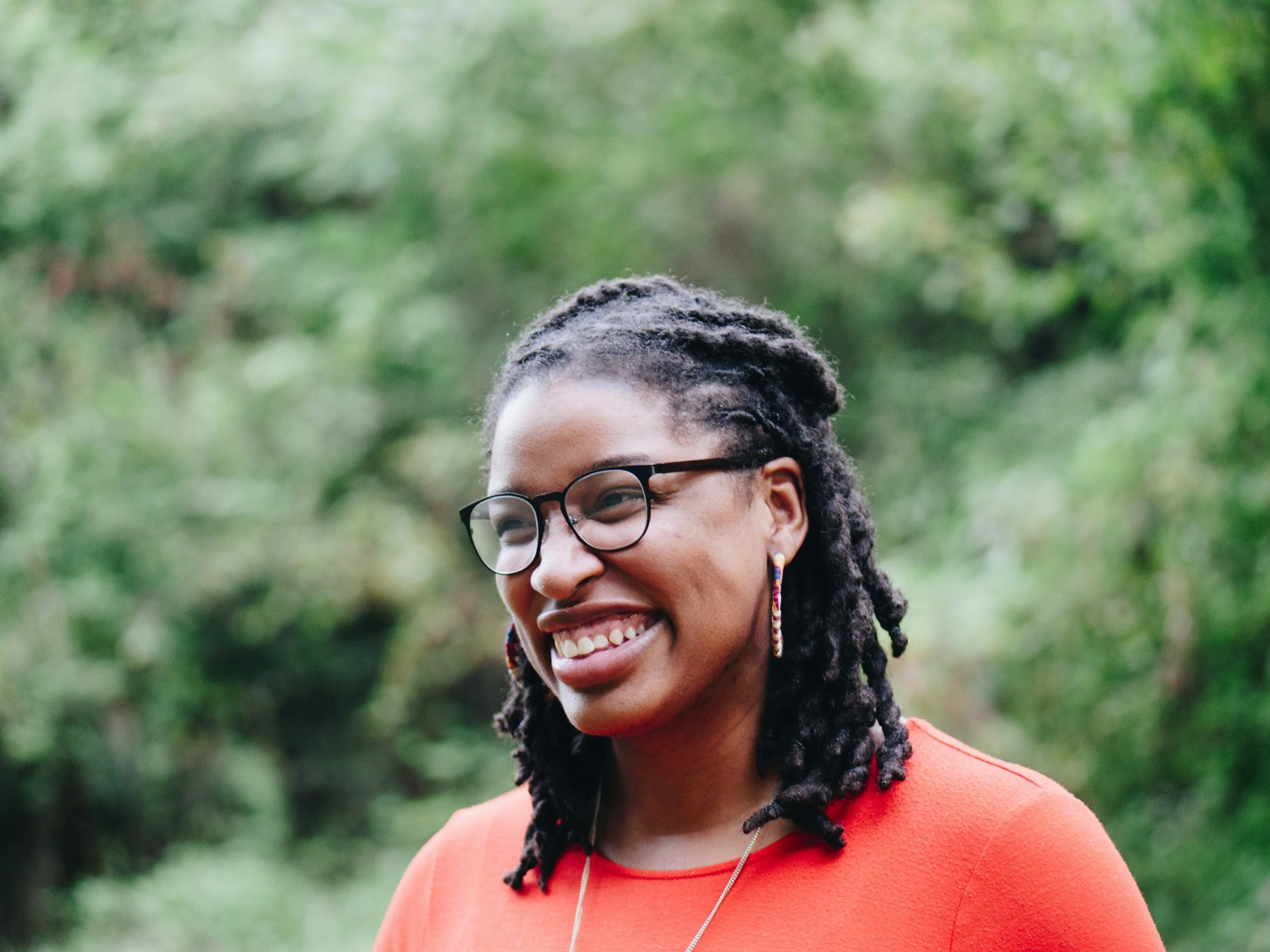
The visual identity of my practice is rooted in "anti-perfection" and authenticity. I’m a real person, not a sterile clinical entity. I bring a non-judgmental, humanistic approach to every session.
I believe that healing happens when we feel seen as we experience ourselves, not as others expect us to be.
Taking the First Step
If you are a woman, non-binary, or fem-identifying adult in the UK looking for a space that truly "gets" neurodivergence, I invite you to reach out.
You don't need a formal diagnosis to be welcome here. You don't need to have "everything figured out" before we talk. You just need to be you.
We can explore your mental health, your life patterns, and your dreams in a way that honours your neurotype rather than trying to change it.
Life can feel loud, but your therapy doesn't have to be. Let's find a way to navigate the world that feels a little more like... you.
Explore my services or book a session here
Roxy Henley aka Counsellor in Therapy offers online integrative humanistic counselling across the UK, specialising in neurodiversity-affirming support for autism, ADHD, and burnout.
