Is It Anxiety, ADHD, or Masking? How to Untangle Your Overwhelmed Mind
If your mind feels like four radio stations are playing at once… you’re not alone.
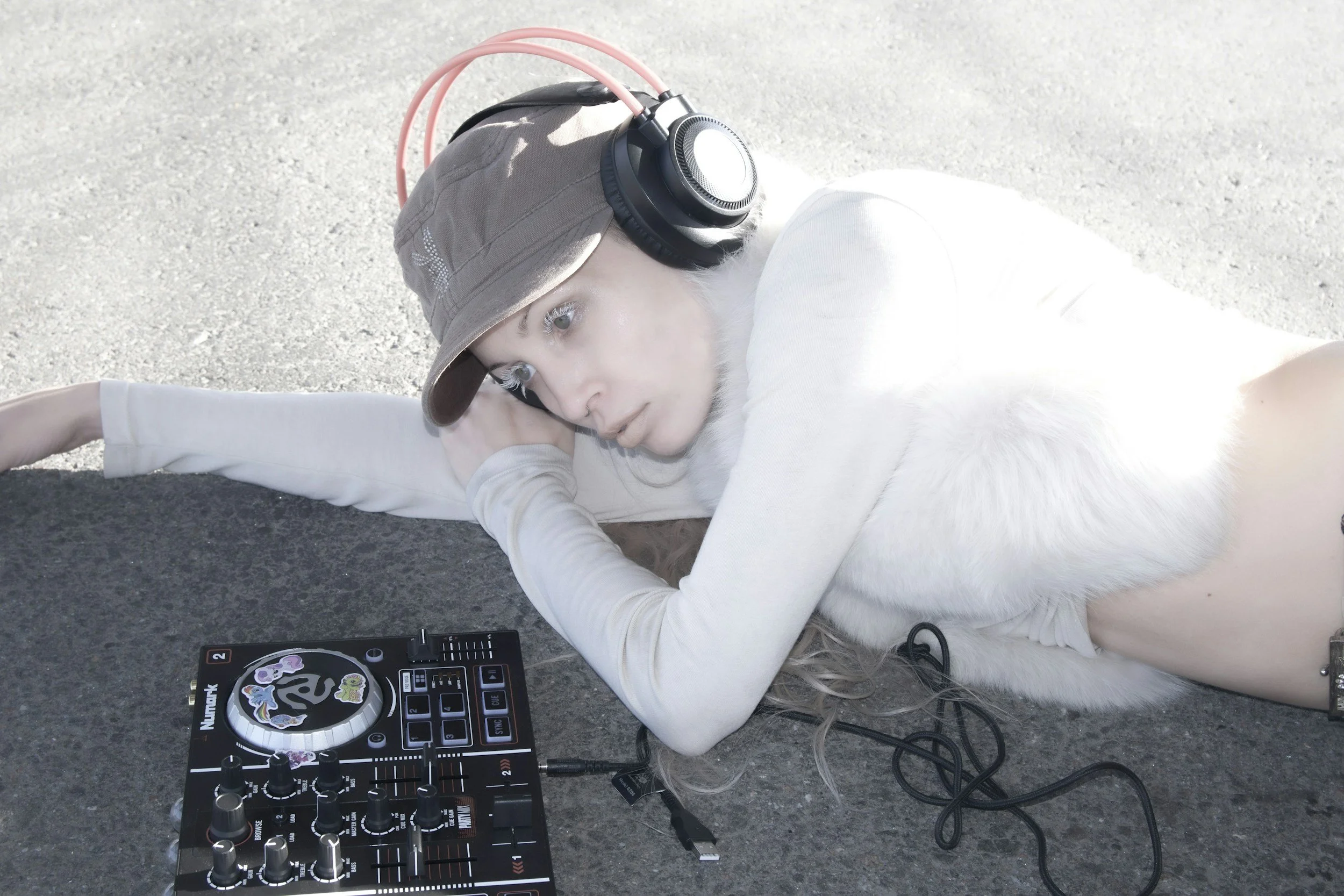
One station is replaying every conversation you’ve ever had.
Another is shouting about the email you forgot to send.
A third is scanning the room for signs that someone is upset with you.
And the fourth is simply making static.
You might be wondering:
Is this anxiety?
Could it be ADHD?
Am I masking?
Why am I so exhausted when I look like I’m coping?
These experiences can overlap. They can also be difficult to untangle, especially if you’re a woman, non-binary person, or fem-identifying adult who has spent years adapting yourself to fit around other people’s expectations.
This article can’t diagnose you.
It can offer a softer framework for noticing your patterns and finding language for what you’re experiencing.
Is anxiety the same as ADHD?
Anxiety and ADHD are different experiences, but they can happen together and sometimes look similar from the outside. Anxiety is often centred around fear and worry, while ADHD may involve lifelong differences with attention, time, planning, organisation and impulse control.
Anxiety can feel like your mind is constantly asking, “What if something goes wrong?”
You might replay conversations.
Check your messages repeatedly.
Feel tense before an ordinary appointment.
Imagine every possible problem before it happens.
ADHD can also create worry.
If you often forget things, underestimate time, lose track of tasks or struggle to start what matters, you may begin building safety nets around yourself. More reminders. More checking. More over-preparing. More panic when the system inevitably becomes too tangled to hold everything.
This can create an anxiety loop:
You’re worried you’ll forget something.
You over-prepare to prevent it.
The preparation takes enormous energy.
You become exhausted and overwhelmed.
Your ability to focus becomes even harder.
You worry that you’re failing.
ADHD and anxiety can also co-exist. One does not automatically explain away the other.
The NHS explains that adult ADHD can involve difficulties with attention, restlessness and impulsivity. For a formal assessment in the UK, clinicians will usually explore whether these patterns have been present since childhood and across more than one area of life.
What does masking look like in ADHD and autism?
Masking is the conscious or unconscious effort to hide, suppress or compensate for parts of yourself so you appear more acceptable, capable or “together”. It may involve people-pleasing, copying social behaviour, forcing eye contact, hiding sensory overwhelm or overworking to cover executive-function difficulties.
Masking can look different for everyone.
You might:
Rehearse what you’re going to say before making a phone call.
Watch other people’s facial expressions so you know how to respond.
Laugh when you don’t understand the joke.
Force yourself to stay still when your body needs movement.
Say “I’m fine” because explaining the truth feels too complicated.
Work late so nobody notices you needed longer than expected.
Keep helping everyone else while quietly running out of charge.
Sometimes it looks like coping…
But inside, it can feel like tangled fairy lights. Everything is connected. Pull one thread and the whole thing tightens.
Masking is not a formal diagnosis. It is better understood as a strategy people may develop in response to social pressure, stigma, misunderstanding or a need to feel safe.
Research on autistic adults has linked camouflaging with anxiety, depression and poorer wellbeing. Hull and colleagues’ research explores the relationship between camouflaging and mental health.
Although the research language is often focused on autism, many ADHD women describe similar experiences of overcompensating, perfectionism, people-pleasing and hiding how much effort daily life takes.

What is neurodivergent burnout?
Neurodivergent burnout is a period of deep exhaustion, reduced capacity and increased sensitivity that can follow long-term stress, masking and unmet support needs. It is not currently a formal diagnosis, but the experience is widely described by neurodivergent people and has been explored in research on autistic burnout.
You may notice that things you could previously manage suddenly feel enormous.
A supermarket trip becomes a full expedition.
A text message feels like a formal administrative task.
Choosing what to eat requires the decision-making power of a small government department.
You may also experience:
Reduced concentration.
More sensory sensitivity.
A stronger need for quiet and recovery time.
Emotional overwhelm or numbness.
Difficulty speaking or finding words.
Withdrawal from people and activities.
Longer recovery after work, socialising or everyday demands.
This doesn’t mean you have done anything wrong.
It may mean your internal charger has been plugged into too many devices for too long.
The Raymaker et al. study on autistic burnout describes burnout as involving exhaustion, reduced functioning and a lowered tolerance for demands. While more research is needed into how burnout presents across different neurotypes, the message is important: your capacity matters.
For a more detailed look, you can read Neurodivergent Burnout: What It Is, Why It Hits Different, and How to Recover.
How can I tell whether overwhelm is anxiety, ADHD, or masking?
Look at the pattern, history and after-effects rather than focusing on one difficult day. Anxiety often centres on fear and threat, ADHD involves longstanding attention and executive-function differences, while masking is the effort of performing or compensating; burnout is what can happen when that effort continues for too long.
This is not a diagnostic checklist.
It is simply a way to become curious about what happens for you.
Try noticing:
When did this begin?
If attention, organisation or emotional regulation have felt difficult since childhood, that history may be useful to explore. Some people were described as daydreamy, sensitive, forgetful or “full of potential” rather than being recognised as neurodivergent.
Where does it happen?
Do difficulties appear at home, at work, in relationships and during everyday tasks? Or do they mainly appear in particular situations?
What happens after you leave?
If you seem calm during a meeting but collapse afterwards, masking may be part of the picture.
What helps?
Does reassurance reduce the worry? Does external structure help you begin a task? Does quiet reduce your overwhelm? Your responses can offer useful clues.
Why is ADHD often missed in women?
ADHD is often missed in women because presentations can be quieter, more internalised and heavily masked. Many women develop coping strategies that hide their difficulties until life demands increase or their usual systems stop working.
A woman may achieve well academically.
Hold down a demanding job.
Care for other people.
Remember everyone’s birthdays.
Look organised from the outside.
And still be spending every ounce of energy keeping the structure upright.
Research and expert guidance recognise that ADHD in women may involve more inattentive traits, emotional overwhelm and internalised distress. The NICE guideline on ADHD recommends a full assessment rather than relying on one questionnaire or one snapshot of your current life.
This is especially important if you have previously been told that anxiety or low mood explains everything, but you still feel confused by ongoing difficulties with time, focus, task initiation or daily organisation.
Sometimes anxiety is the main concern.
Sometimes ADHD is part of the picture.
Sometimes both are present.
The goal is not to force yourself into one neat category. It is to understand what support might fit.

Can therapy help if I don’t have an ADHD diagnosis?
Yes. You do not need a formal diagnosis to seek counselling for anxiety, overwhelm, masking, burnout or uncertainty about your neurotype. Therapy can help you explore your current experience without making a diagnosis or asking you to prove that your struggles are valid.
You might be diagnosed.
You might be waiting for an assessment.
You might be self-identified.
You might simply have a quiet feeling that traditional explanations have never quite fitted.
All of these experiences are welcome in a supportive space.
In therapy, we can explore what happens when your “coping” systems stop working. We might look at people-pleasing, perfectionism, sensory needs, self-criticism, relationships, boundaries and the pressure to appear fine.
We can also think about what makes life more sustainable.
Not a perfect morning routine with twelve colour-coded steps.
Something realistic.
Something that works with your rhythms.
Something that does not become another little project to fail at.
What does ADHD therapy for women look like online?
ADHD therapy for women can involve exploring attention patterns, emotional responses, masking, self-worth, relationships and burnout in a collaborative, neurodiversity-affirming way. Online counselling offers a familiar environment where you can manage your sensory needs and take part without the added pressure of travelling to a clinic.
With online counselling UK sessions, you can:
Sit somewhere comfortable.
Wear clothes that feel right.
Look away from the screen while you think.
Have a drink, fidget or sensory aid nearby.
Take a moment if your words disappear.
Create a quieter space around you.
My sessions are 50 minutes and shaped around your pace.
I practise integrative humanistic counselling, which means the relationship between us is central. I’m not sitting behind a clipboard trying to solve you like a mystery in a detective programme.
I’m alongside you.
We can slow things down.
Notice what is happening.
Think out loud.
Follow the thread that feels most important.
You can read more about what neurodiversity-affirming therapy actually looks like.
What can I do when my mind feels completely overwhelmed?
Start by reducing the pressure to solve everything immediately. You might pause, name what you notice, lower one demand, or choose one small source of comfort while you work out what your mind and body are asking for.
You could try asking:
Am I worried about something specific, or does everything feel threatening?
Have I been performing “fine” for too long?
What demand could be made smaller today?
Do I need less noise, light, conversation or decision-making?
Is there someone safe I can tell the truth to?
What would feel supportive rather than impressive?
There is no gold star for reaching complete exhaustion before you ask for support.
If you are experiencing severe distress or feel at risk of harming yourself, contact NHS urgent mental health support or call 999 in an emergency.
How can I get support for anxiety, ADHD or masking?
You can contact Counsellor in Therapy to arrange a free 20-minute introductory call and ask questions about working together. You do not need a diagnosis, a perfect explanation or a beautifully organised summary of your entire life.
If you are ready, you can make an enquiry through the Counsellor in Therapy website.
We can explore what has brought you here and whether my approach feels like the right fit.
No pressure.
No performance review.
No need to arrive with the tangled fairy lights already sorted.
Just a confidential space to begin noticing what is happening as you experience it.
You can also follow @counsellor_in_therapy on Instagram for gentle, neurodiversity-affirming reflections on anxiety, ADHD, masking, burnout and everyday wellbeing.
